Burt’s Theory of Structural Holes
Social Capital, Network Constraint, and Brokerage
What is a Structural Hole?
- Definition:
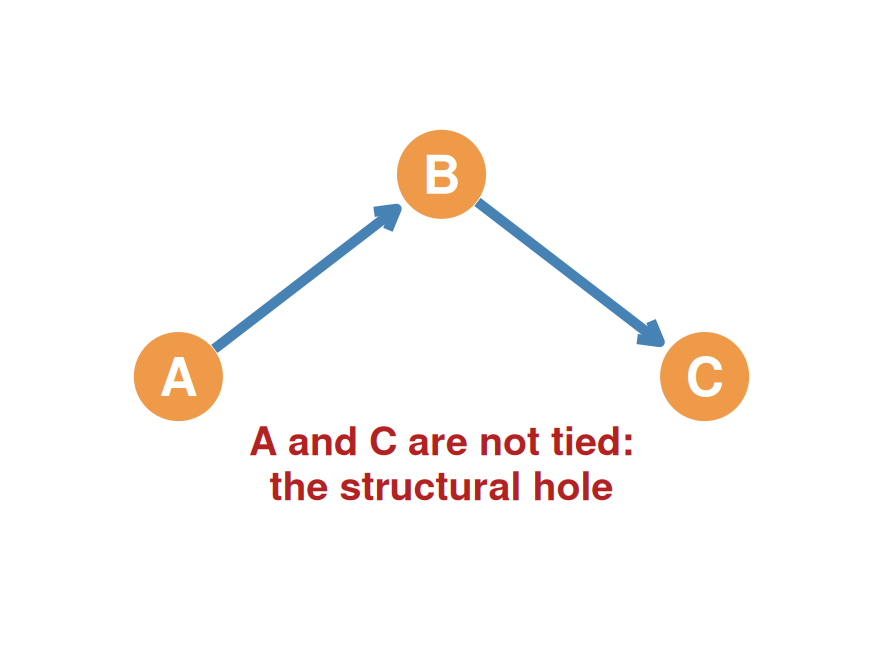
- A structural hole is the absence of a tie between two parts of a social network.
- In graph-theoretic terms, they are two-paths that are not closed triangles.
- Open vs. Closed Networks:
- Densely connected, high-clustering groups (friends of friends are friends) lack structural holes.
- Disconnected clusters leave holes between them.
- The Broker:
- An actor who spans or “fills” a structural hole is a broker.
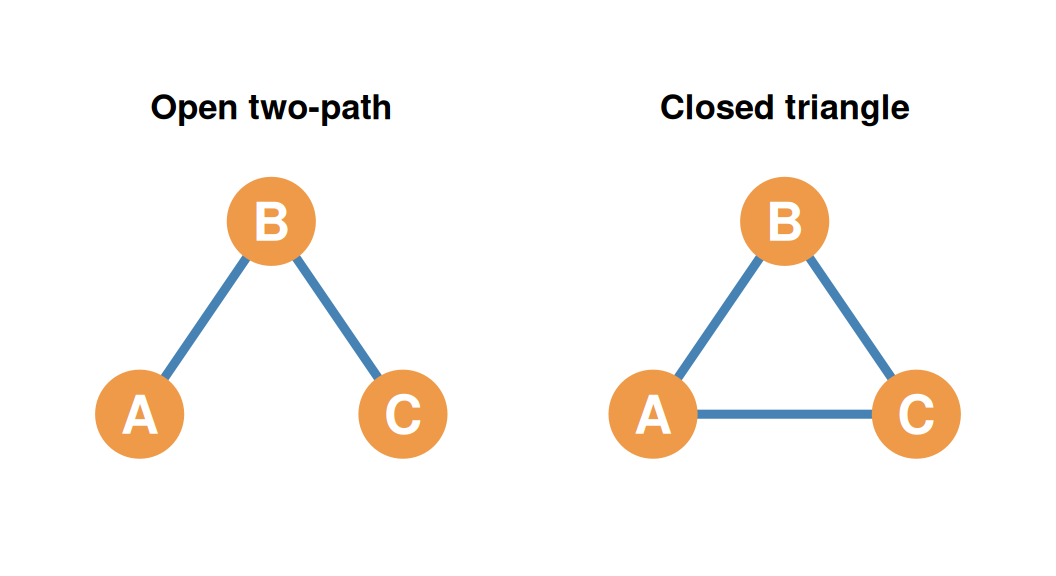
- Redundancy: in closed networks, everyone hears the same things. Spanning a hole buys access to non-redundant information.
Visualizing a Structural Hole
- The Spanning Structure:
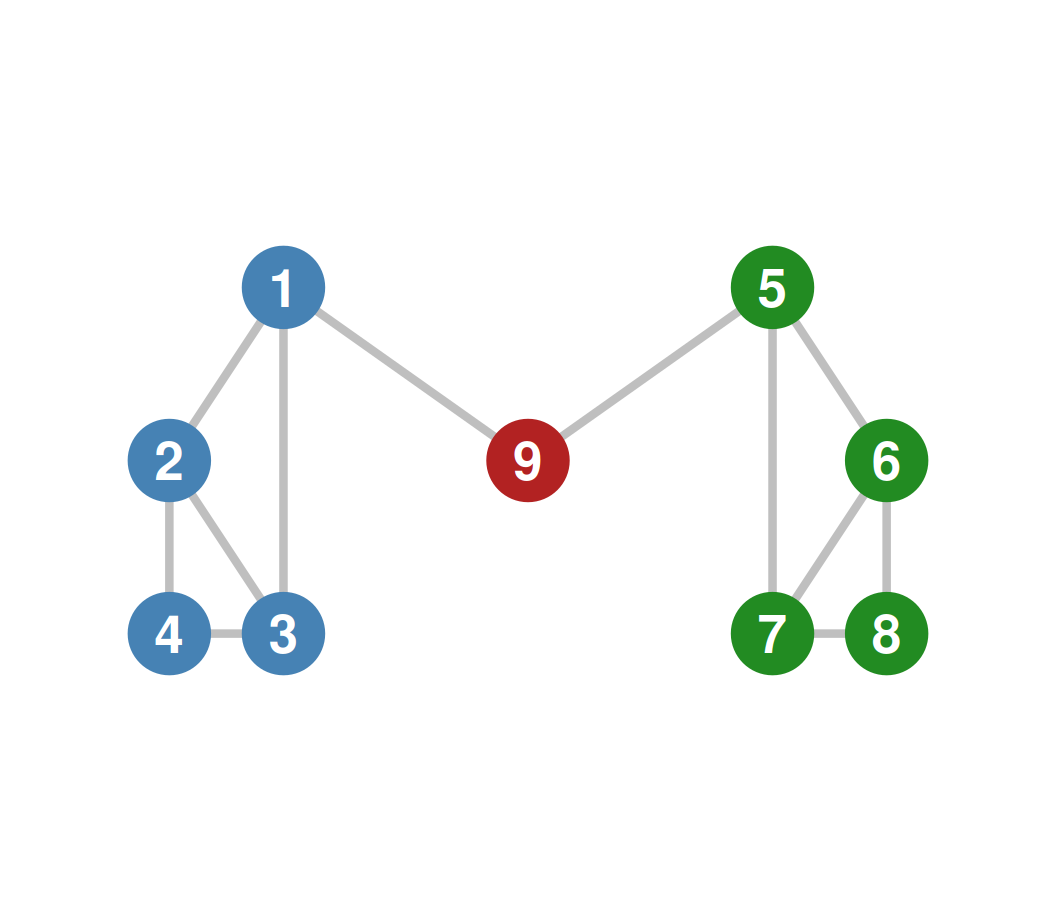
- Group A (blue) is internally cohesive and densely connected.
- Group B (green) is also internally cohesive and densely connected.
- There is a structural hole (gap) between Group A and Group B.
- The Broker (red) is the only node connecting Group A and Group B.
- Result: All information, influence, and resources flowing between the groups must pass through the broker.
When a Hole Starts to Close: Redundancy
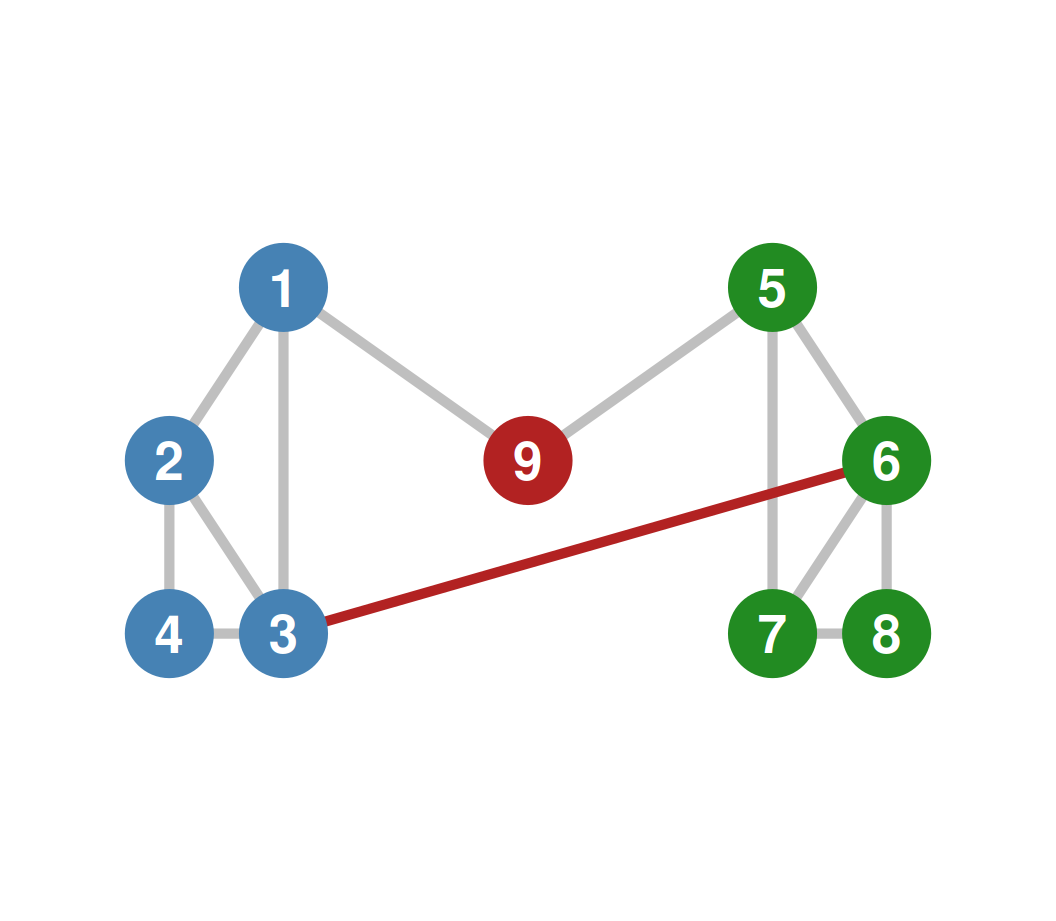
Same two groups, same red broker — but now a second channel (the red tie 3–6) crosses the gap.
Information can route around the broker: node 9’s control advantage shrinks, and the two channels carry overlapping news.
Burt’s point: a broker position is valuable because it is exclusive. Every extra tie across a hole makes ego’s contacts more redundant — and the hole less profitable.
Network Constraint: The Inverse of Structural Holes
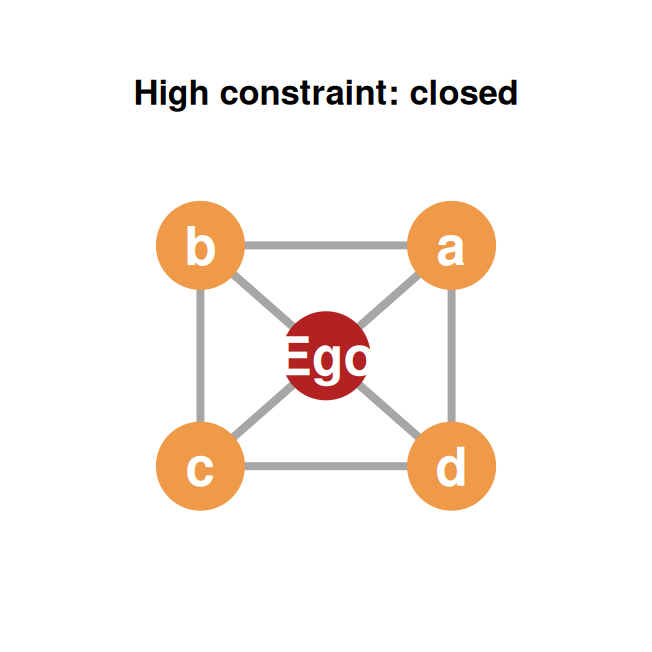
High constraint: ego’s contacts are tied to each other. News repeats; a single group’s expectations bind ego.
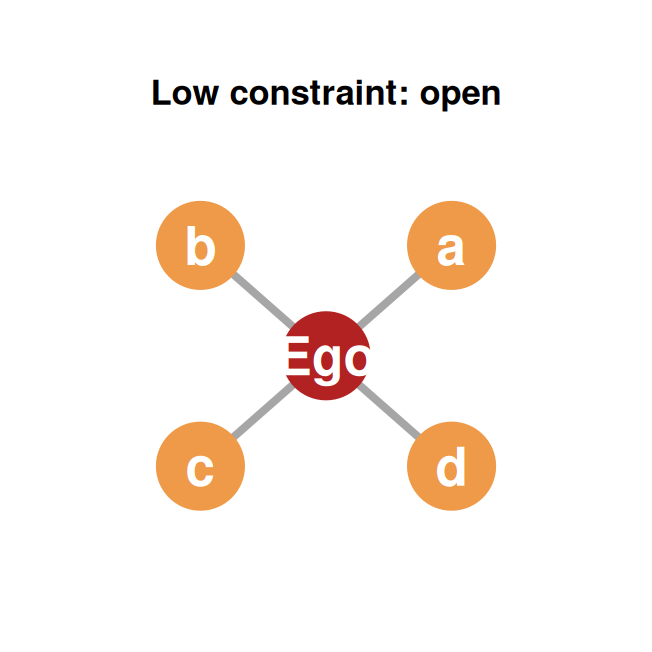
Low constraint: ego’s contacts are disconnected. Each alter is a separate doorway to a different circle.
Constraint is the mirror image of brokerage opportunity.
Determinants of Network Constraint
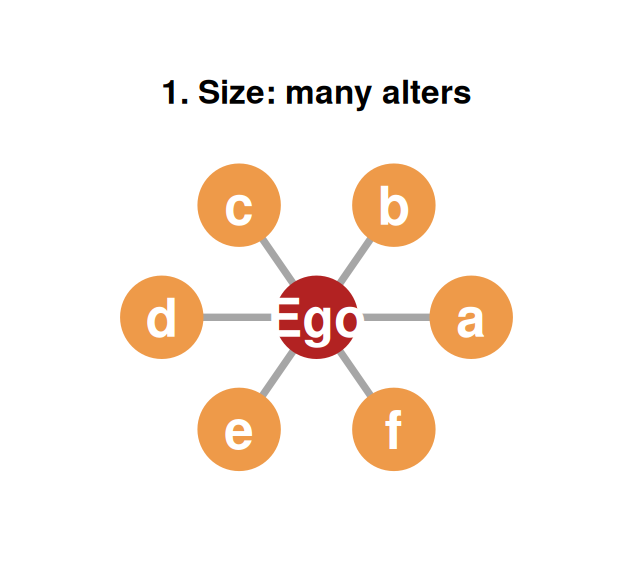
Size: many alters are hard to close — bigger networks leave more holes.
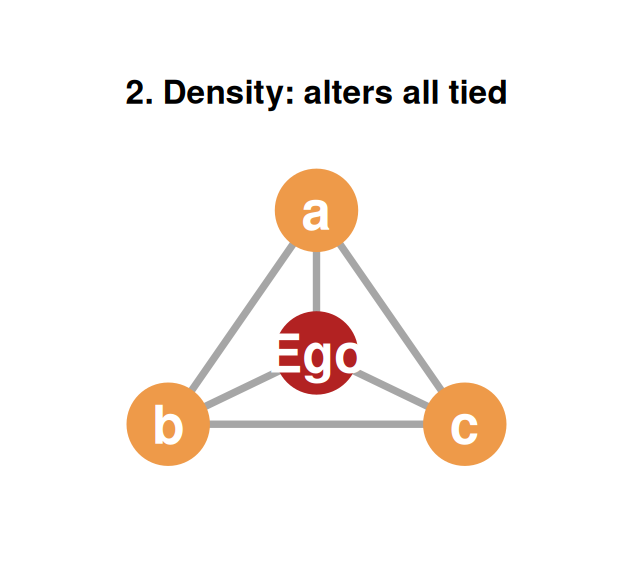
Density: alters tied to each other say the same things — redundant information, high constraint.
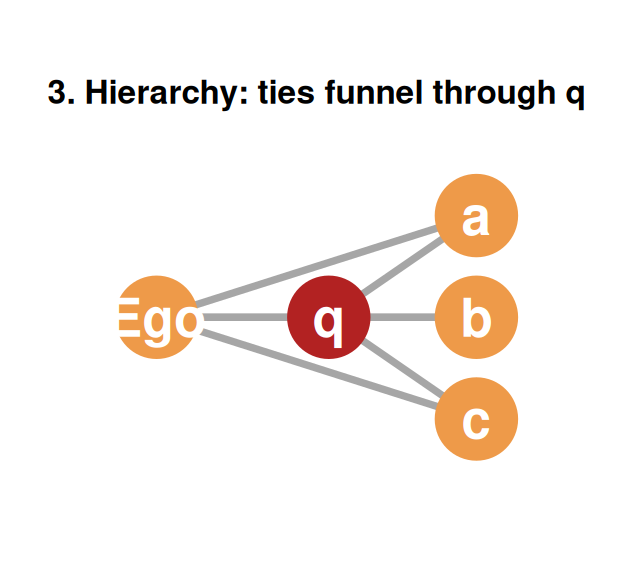
Hierarchy: when all routes between ego’s contacts run through one hub (\(q\)), ego depends on that channel.
(The formula behind these three ingredients lives in the optional appendix at the end of the deck.)
Empirical Findings: SHT in Corporate Settings
Burt’s corporate studies (2004, 2005) compare managers who differ in network constraint:
- Higher salaries for low-constraint senior managers and executives.
- Faster promotions to higher ranks.
- Better performance evaluations from their organizations.
Rank nuance: constraint matters little for entry-level managers, whose work is standardized. For senior managers and executives, it is a critical predictor of rewards.
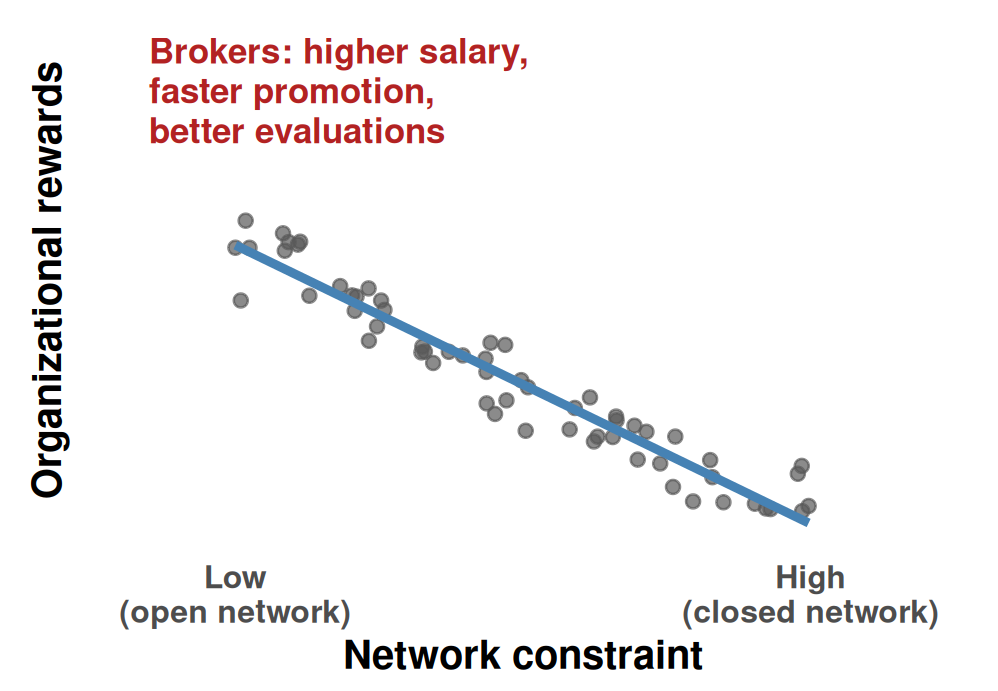
The finding is a negative association between network constraint and organizational reward.
Idea Generation: The Broker’s Creative Edge
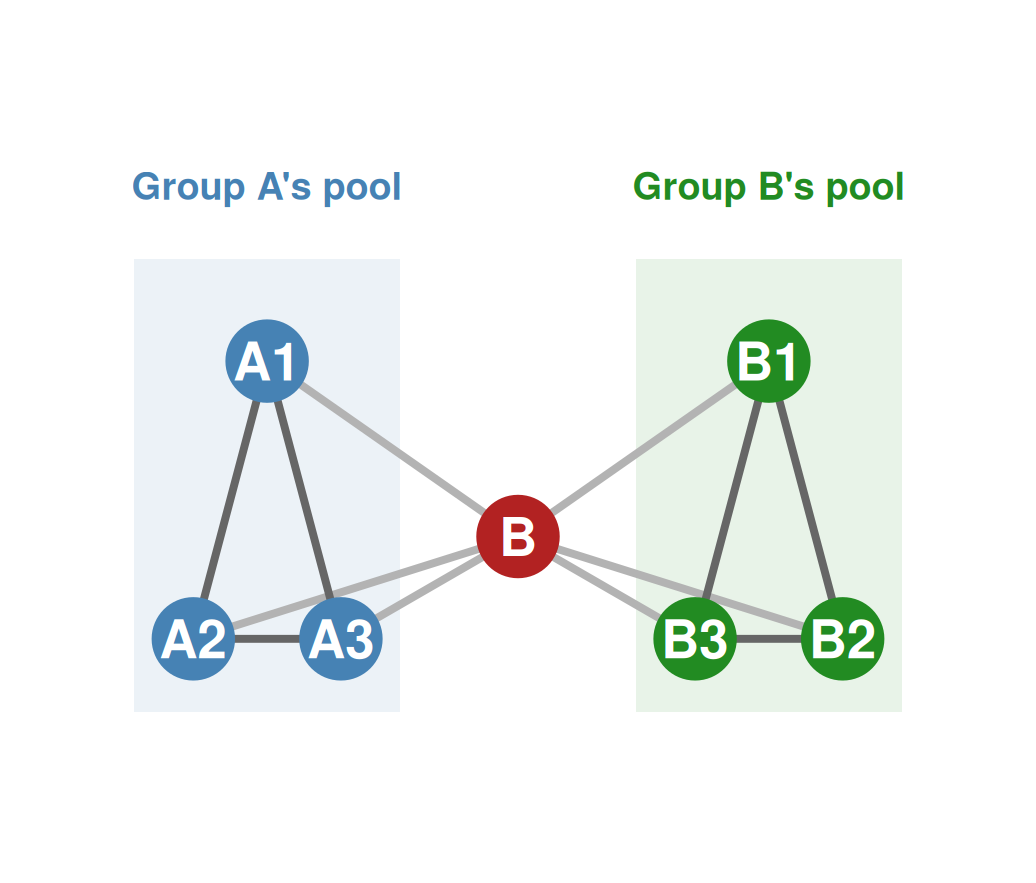
Why do brokers perform better? Burt (2004): they generate better ideas.
Densely clustered groups are echo chambers; each pool recycles the same assumptions.
Brokers sit between pools and can select, translate, and combine ideas that never meet inside either group.
The value is in the recombination: either group can produce A1 or B2; only the broker can produce the synthesis.
Gould & Fernandez: Typology of Brokerage Roles
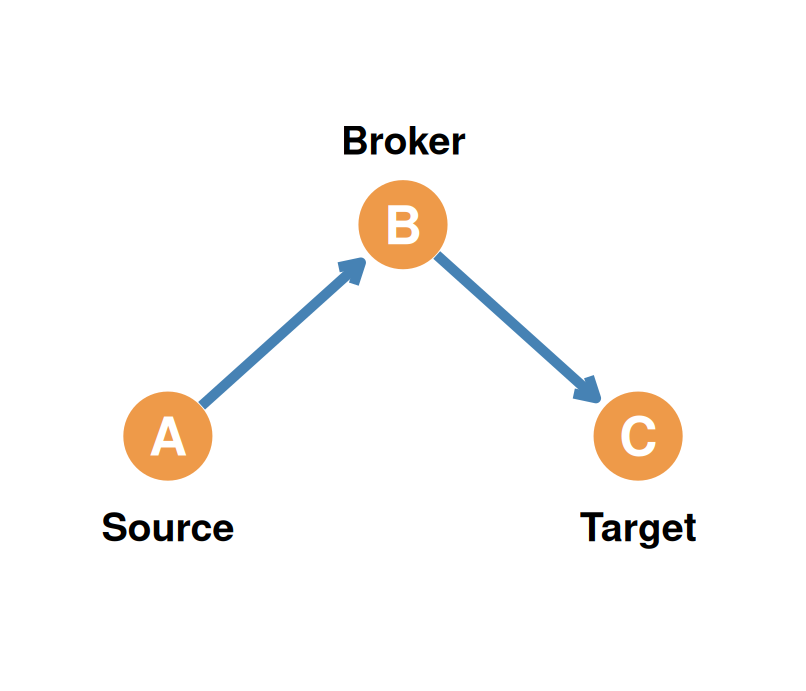
Gould and Fernandez (1989) treat brokerage as a triadic role: a Source sends, a Broker intermediates, a Target receives.
Partition the nodes into social groups, and the group memberships of the three actors define five brokerage roles.
The roles separate within-group intermediation (Coordinator, Consultant) from between-group intermediation (Gatekeeper, Representative, Liaison).
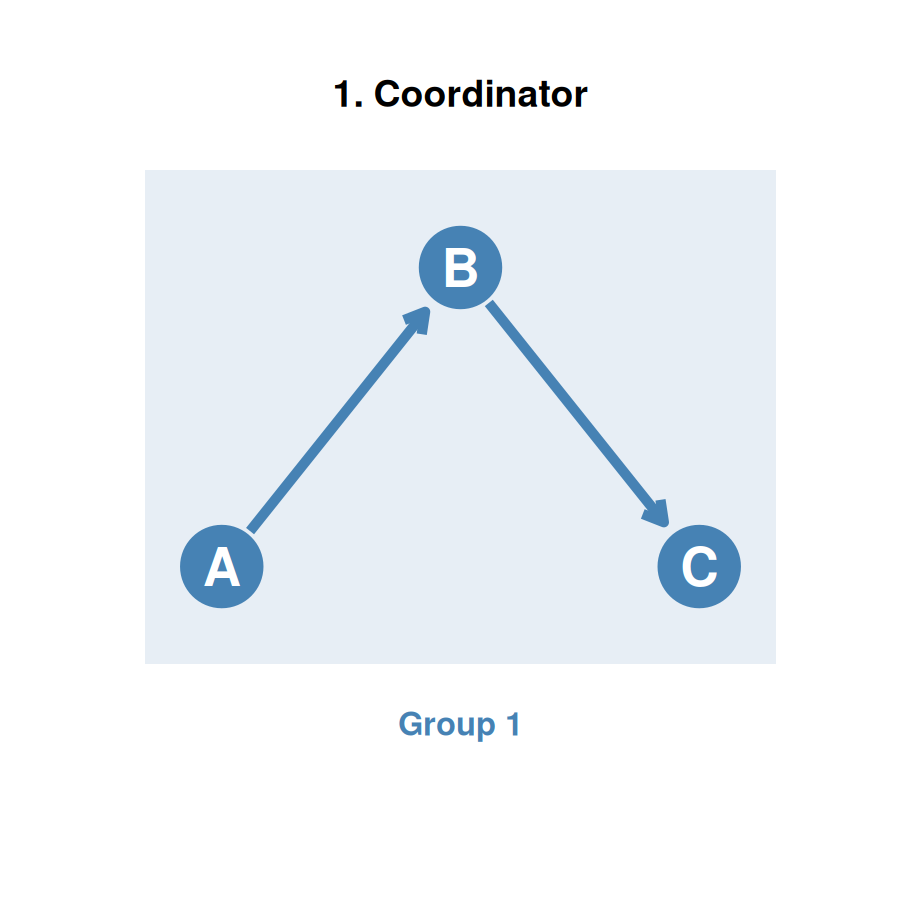
1. Coordinator (Within-Group Brokerage)
- Definition:
- The Source, the Broker, and the Target all belong to the same social group (Group 1).
- Core Action:
- The broker acts as an internal facilitator, helping to coordinate relations, resolve blockages, and synthesize ideas within their own cohesive cluster.
- Sociological Significance:
- Highlights local integration and group-level cohesion, making sure internal cliques communicate smoothly.
- Real-World Example:
- An internal project manager linking two disconnected engineers within the same department.
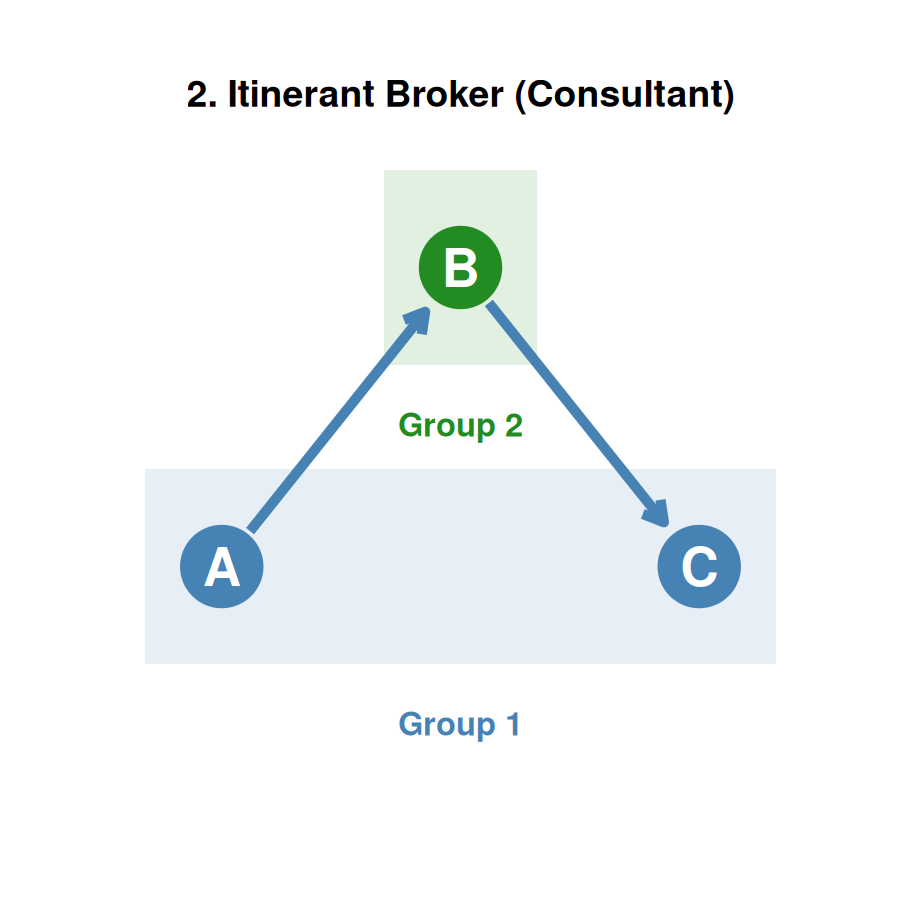
2. Itinerant Broker / Consultant (Within-Group)
- Definition:
- The Source and the Target belong to the same group (Group 1), but the Broker is an outsider (member of Group 2).
- Core Action:
- The broker provides external mediation or unbiased consulting, acting as an objective intermediary between two insiders.
- Sociological Significance:
- Demonstrates impartial intermediation where groups recruit third-party experts to facilitate internal relations.
- Real-World Example:
- An external mediator or consultant brought in to resolve a dispute between two executives in the same company.
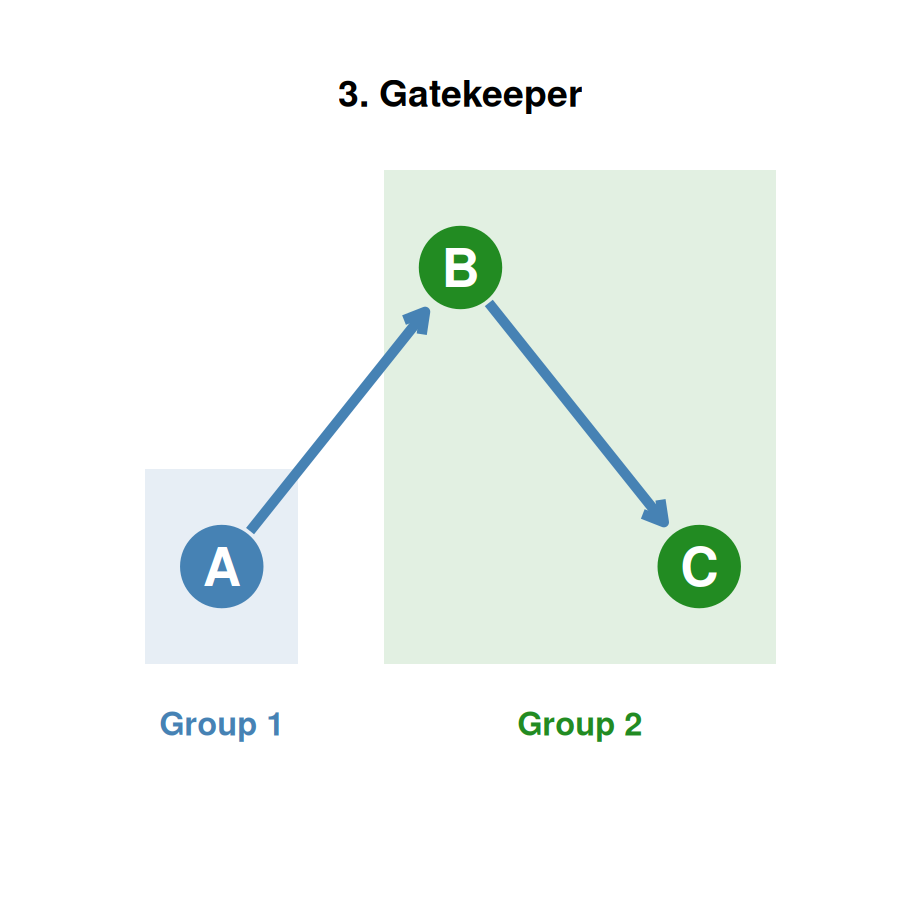
3. Gatekeeper (Between-Group Brokerage)
- Definition:
- The Source is an outsider (Group 1), but the Broker and the Target belong to the same group (Group 2).
- Core Action:
- The broker controls inward boundary spanning, deciding whether to admit, block, or filter external information, resources, or actors entering their group.
- Sociological Significance:
- Represents gatekeeping power, protecting group boundaries and filtering noise.
- Real-World Example:
- An executive assistant filtering which client calls or emails reach their supervisor.
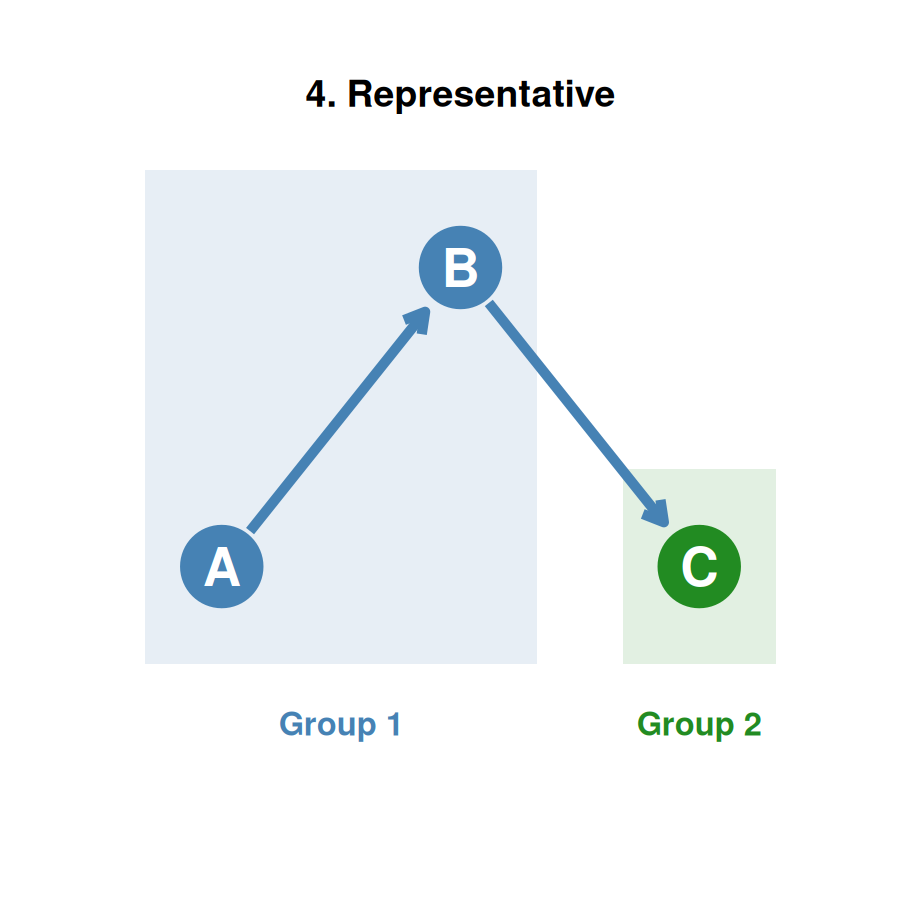
4. Representative (Between-Group Brokerage)
- Definition:
- The Source and the Broker belong to the same group (Group 1), while the Target is an outsider (Group 2).
- Core Action:
- The broker controls outward boundary spanning, acting as a spokesperson or link who represents their group to the external world.
- Sociological Significance:
- Represents external representation, projecting group voice and managing outgoing resources.
- Real-World Example:
- A PR officer or sales representative presenting their department’s work to external clients.
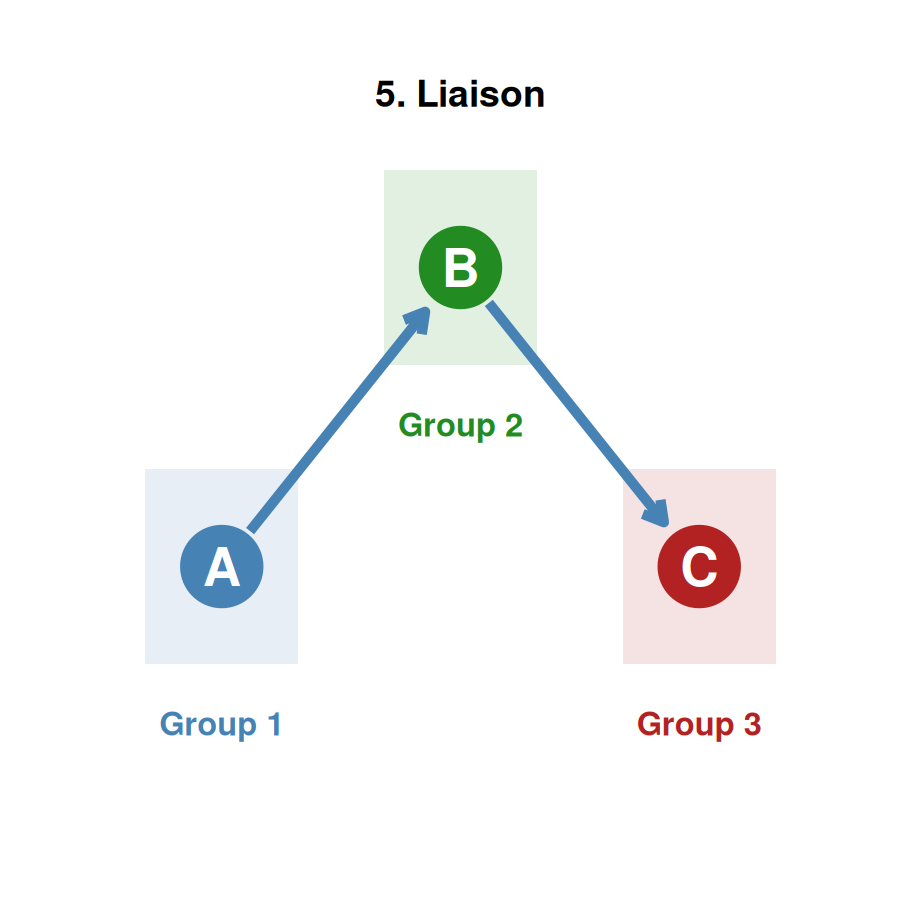
5. Liaison (Between-Group Brokerage)
- Definition:
- The Source (Group 1), the Broker (Group 2), and the Target (Group 3) all belong to three completely different groups.
- Core Action:
- The broker provides cross-boundary mediation, linking entirely disparate social worlds without belonging to either. This is the most expansive and least constrained form of brokerage.
- Sociological Significance:
- Acts as a structural bridge connecting disconnected societies, vital for systemic innovation.
- Real-World Example:
- A real estate agent connecting a buyer from one city with a seller from another.
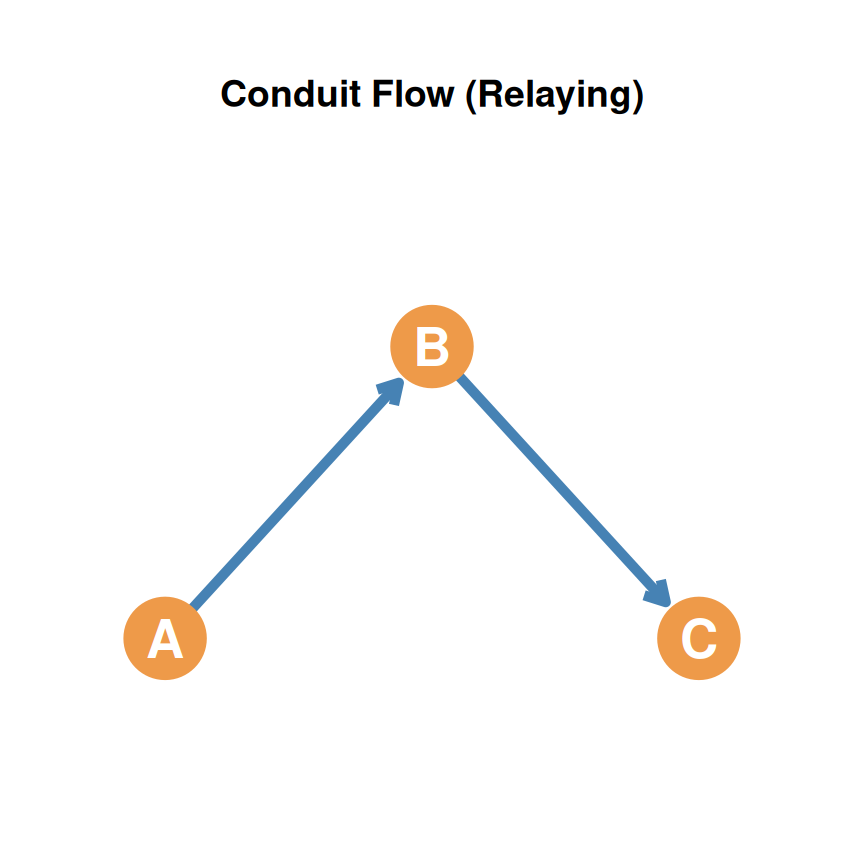
1. The Conduit Process
- Core Action:
- The broker simply transfers information, ideas, or solutions between two parties without attempting to change the underlying relationship between them.
- Key Characteristics:
- B acts as a passive transmitter or relay.
- Alters A and C may never meet, or even become aware of each other’s existence.
- Value is generated through the synthesis of disparate knowledge bases.
- Real-World Example:
- A retailer who buys products from manufacturers (A) and sells them to consumers (C) without connecting them directly.
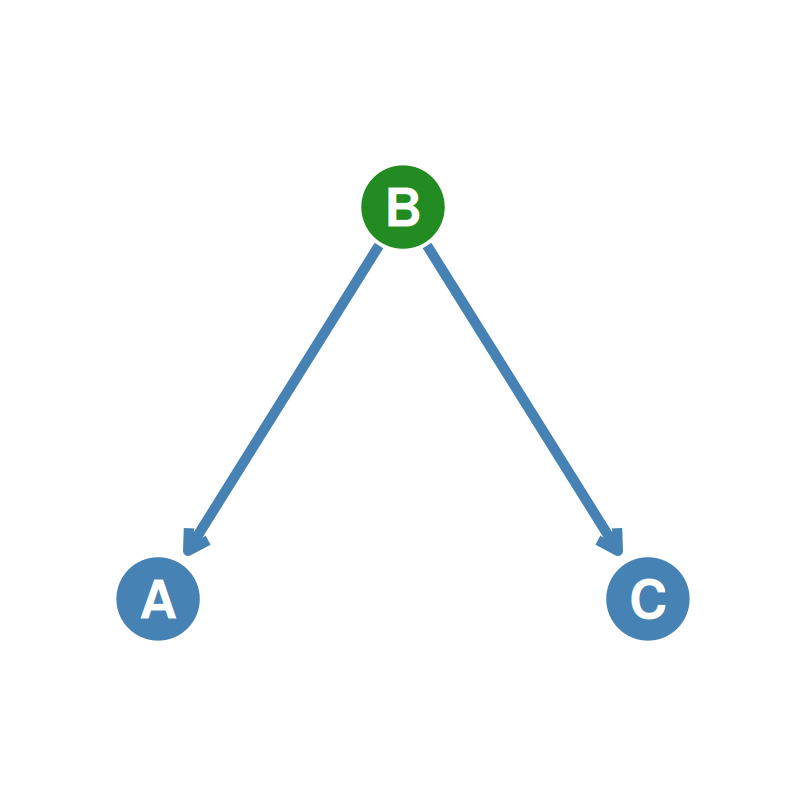
2. The Tertius Gaudens Orientation
- Core Action:
- Translating from Latin to “the third who benefits” (Simmel, 1950), the broker actively exploits the separation of alters.
- Key Characteristics:
- B stands between A and C and maintains the gap, keeping them disconnected or actively encouraging conflict/competition between them.
- Also known as divide et impera (divide and conquer).
- Maximizes the broker’s control advantage and information arbitrage.
- Real-World Example:
- A manager who prevents two employees from collaborating directly so they remain dependent on the manager for coordination and praise.
3. The Tertius Iungens Orientation
- Core Action:
- Translating from Latin to “the third who joins” (Obstfeld, 2005), the broker actively connects or facilitates interactions between alters.
- Key Characteristics:
- B introduces A and C, closing the structural hole by creating a new direct connection between them.
- Focuses on coordinating collaborative action, joint problem-solving, and building trust.
- Ego may step back after introducing them (introduce-and-depart), sacrificing their long-term structural advantage for immediate collaborative value.
- Real-World Example:
- A matchmaker who introduces two entrepreneurs with complementary skills to start a new business together.
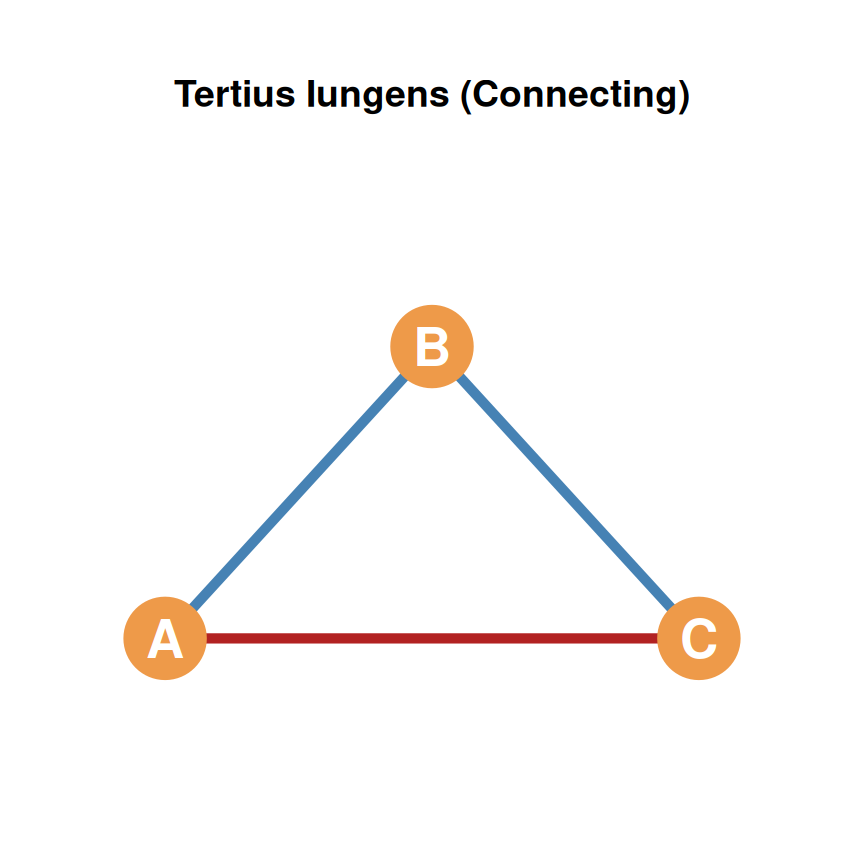
- A new direct relationship link is forged between A and C (highlighted in red), closing the structural hole.
Decoupling Action from Structure: The Obstfeld Matrix
- Obstfeld et al. (2014): three strategic orientations under two network structures (Open vs. Closed) — action is decoupled from structural holes.
Open Network (no tie between A and C — the hole is fully open):
Conduit
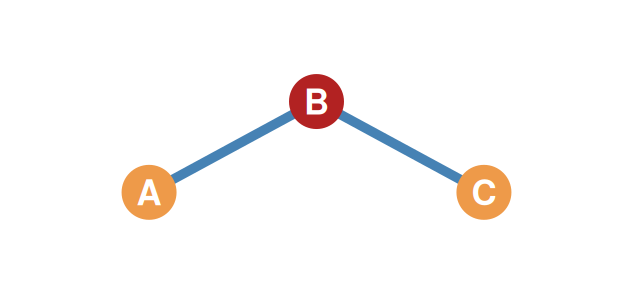
Information transfer. B passes information, knowledge, or resources between A and C, who have no prior connection.
Tertius Gaudens
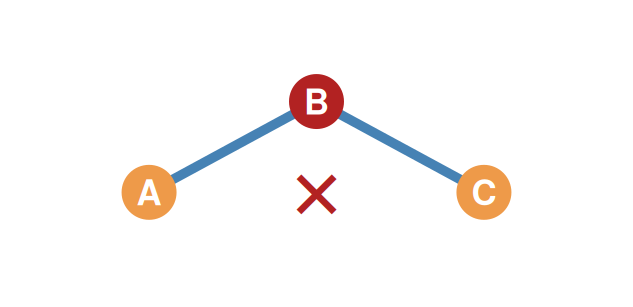
Arbitrage & separation. B plays A and C against one another — or actively keeps them apart to maintain control.
Tertius Iungens
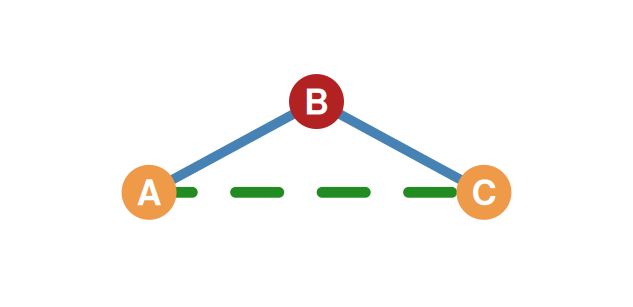
Introducing alters. B introduces A and C, closing the structural hole by creating a new tie.
The Obstfeld Matrix: Closed Networks
Closed Network (A and C are already tied — the hole is closed):
Conduit
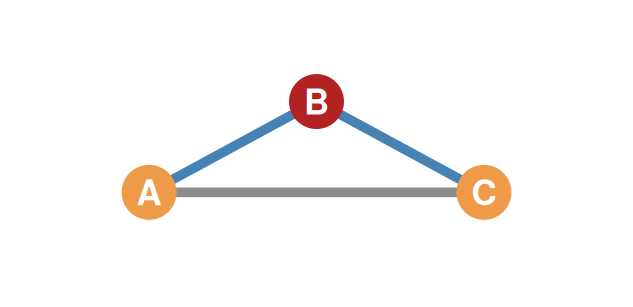
Facilitated synthesis. A and C are already connected; B facilitates the transfer and helps synthesize new knowledge.
Tertius Gaudens
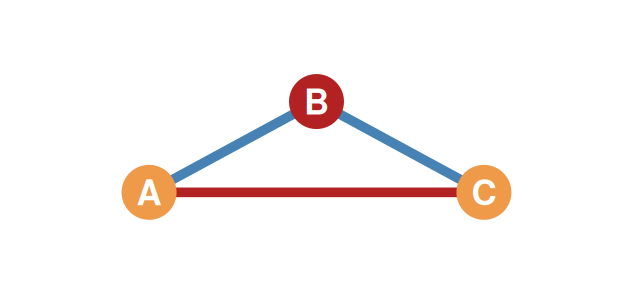
Divide et impera. B cultivates conflict, competition, or separation between already-tied A and C.
Tertius Iungens
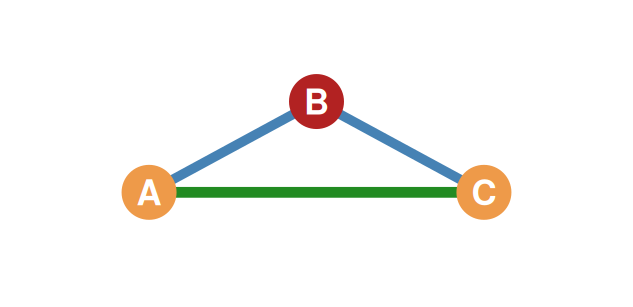
Coordinated collaboration. B coordinates new collaborative action or deepens the A–C partnership.
Two Ways Novelty Reaches You
The distant correspondent: someone in a different circle who writes twice a year.
- Every letter is novel — but two letters a year is a thin stream.
The group chat: close contacts texting fifty times a day about a world you mostly share.
- Most of it is redundant — but sheer volume keeps slipping you genuinely new things.
The Same Closure Does Both
- Novelty received over time = novelty per message × number of messages:
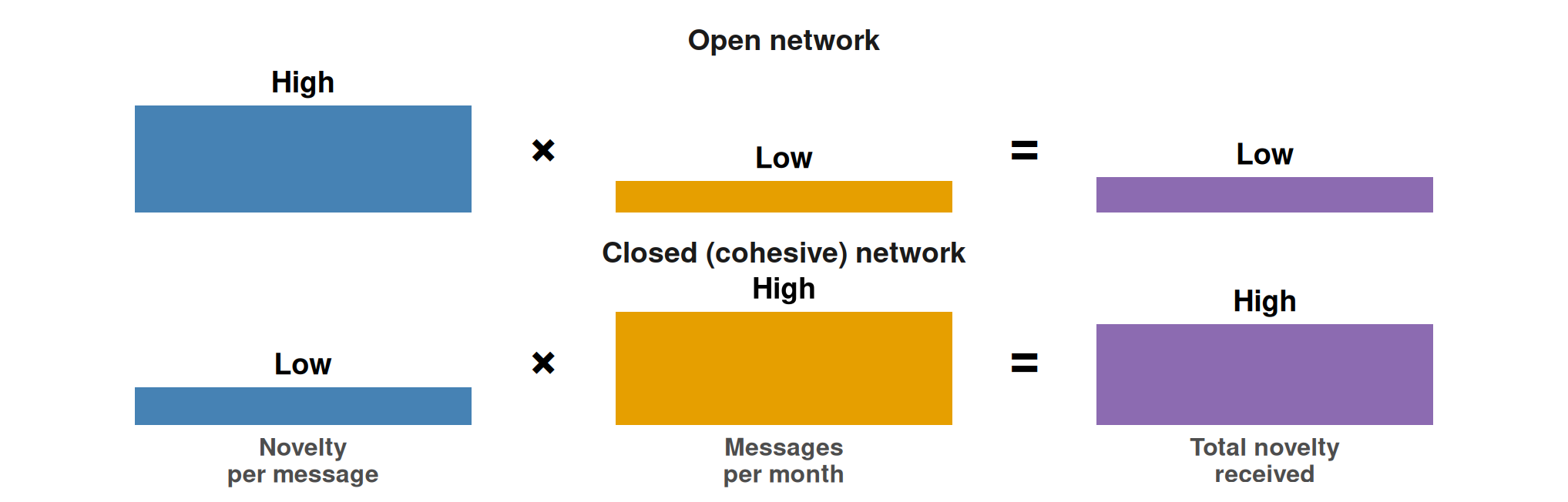
Cohesive (closed) networks make knowledge redundant but ties chattier — and volume wins. Open networks do the reverse: novel pools behind rarely used channels.
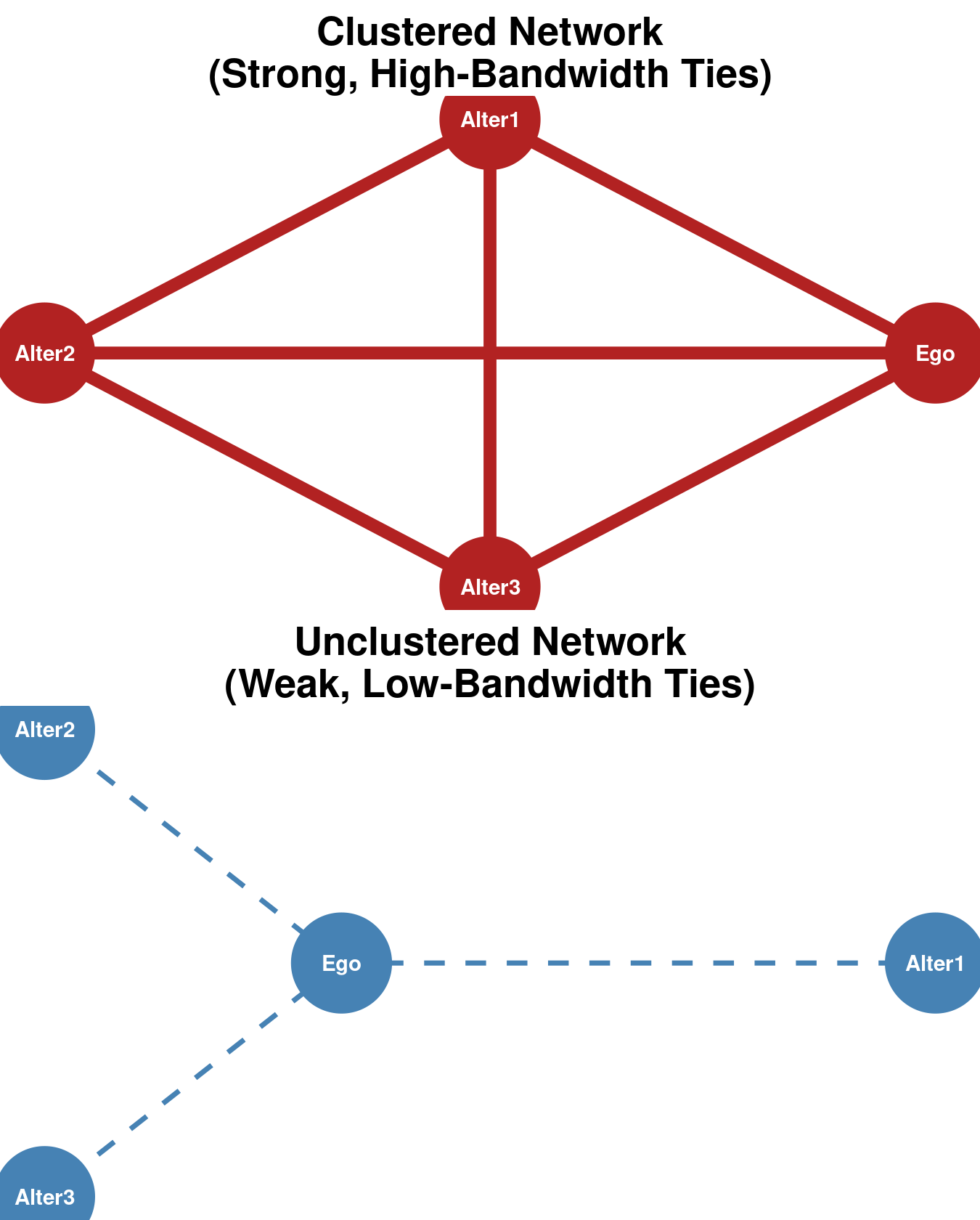
Social distance is inverse bandwidth — the more socially distant the contact, the less you communicate.
The Information Environment Decides
- Which tie wins depends on three features of the information environment:
Overlap
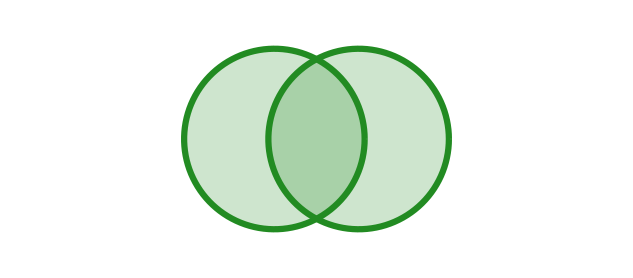
How much your contacts’ knowledge overlaps
Refresh rate
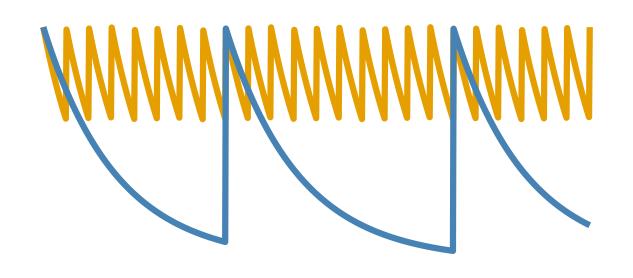
How fast information changes over time
Topic space
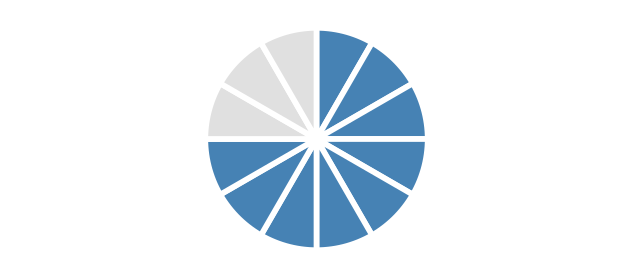
How many different topics there are to know
Accessing Diverse Information Pools
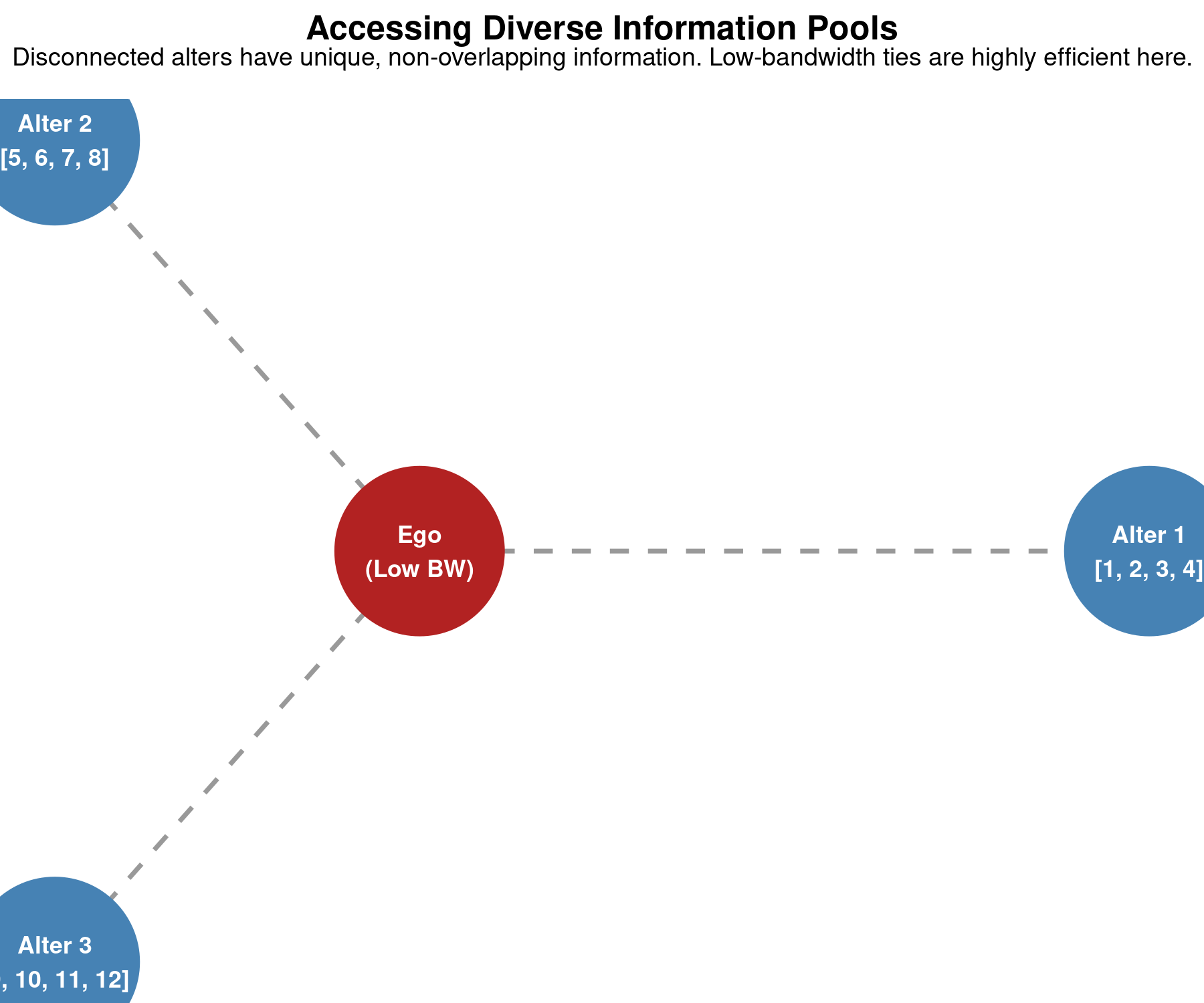
- Condition for Weak Ties:
- Low-bandwidth (weak) ties are highly efficient when contacts possess diverse, non-overlapping information pools.
- Visual Example:
- Alter 1 knows
[1, 2, 3, 4]. - Alter 2 knows
[5, 6, 7, 8]. - Alter 3 knows
[9, 10, 11, 12]. - Because their information does not overlap, Ego maximizes diversity at minimal bandwidth cost.
- Alter 1 knows
Redundant Information Pools
- Condition for Strong Ties:
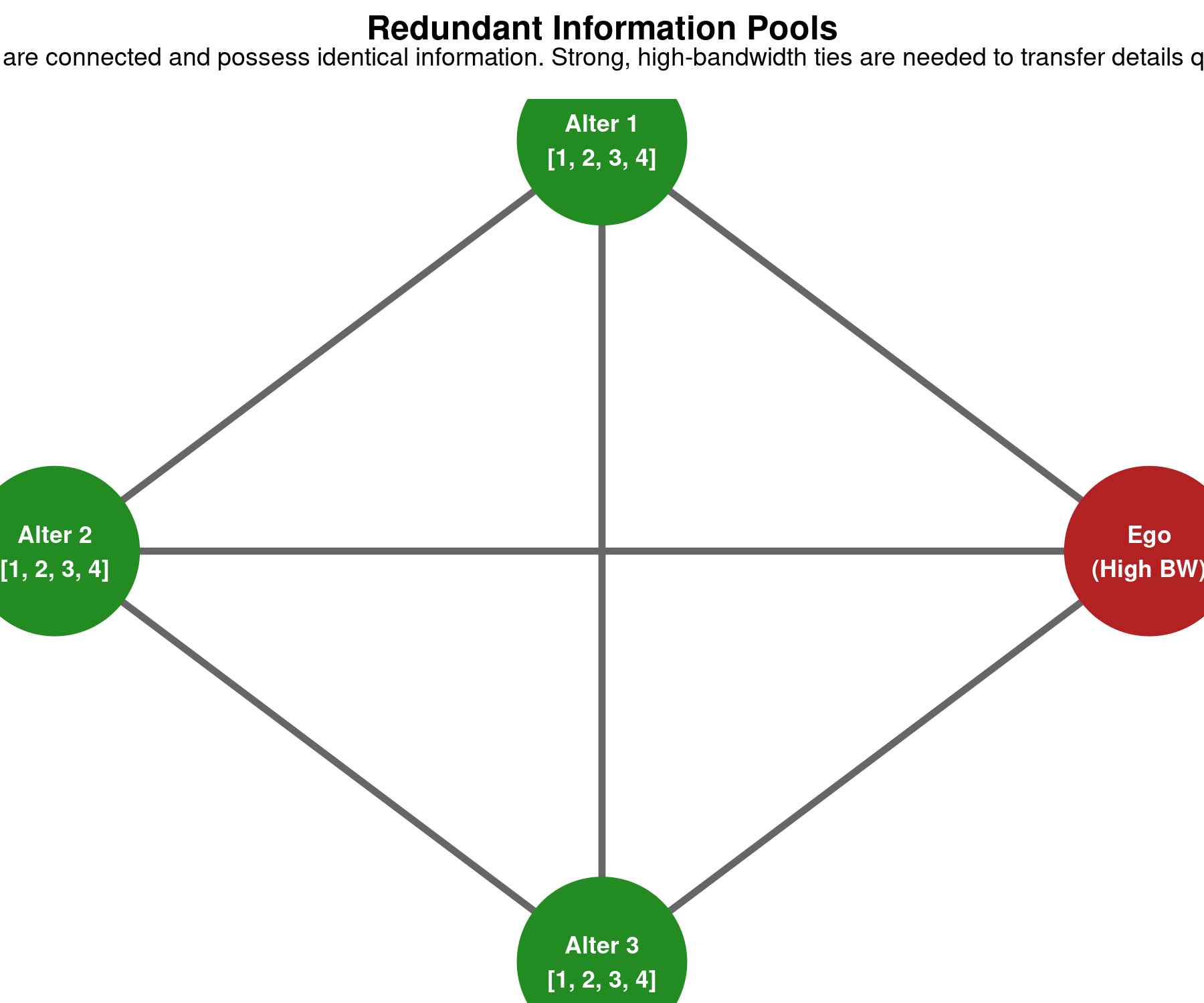
- Weak ties lose their advantage if contacts are connected and possess redundant/homogeneous information.
- Visual Example:
- Alters talk to each other and all know
[1, 2, 3, 4]. - Low-bandwidth ties simply receive the same redundant information slowly.
- In this case, strong, high-bandwidth ties are better because they provide faster, deeper access to the complex details of
[1, 2, 3, 4].
- Alters talk to each other and all know
The Information Overlap Spectrum
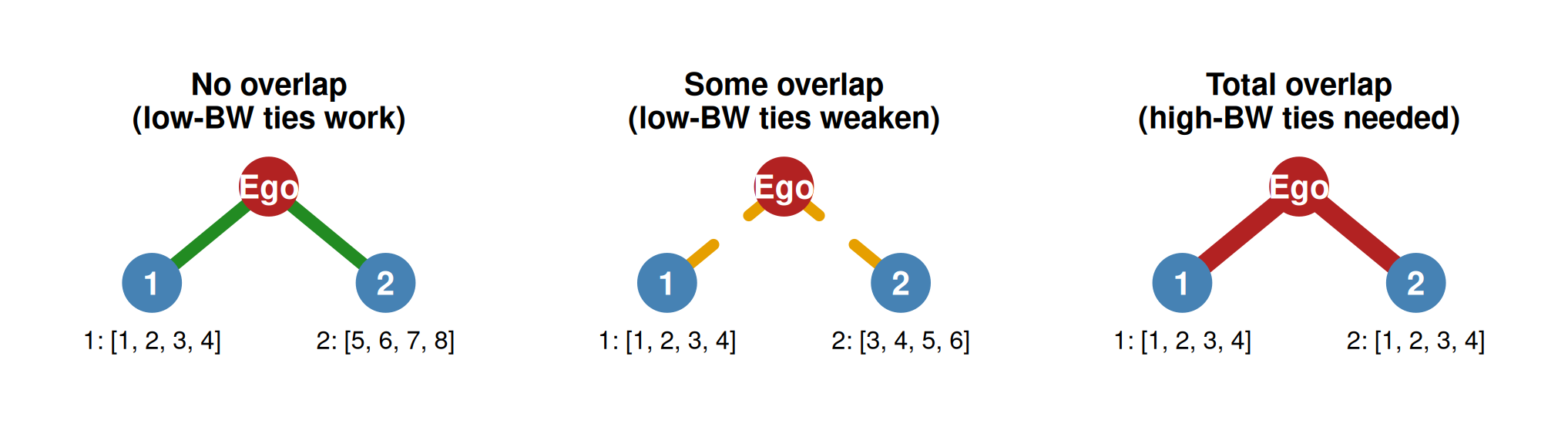
The choice between low-bandwidth and high-bandwidth ties depends on the degree of information overlap among your contacts:
No overlap: low-bandwidth ties are highly effective — each alter brings wholly different knowledge.
Some overlap: low-bandwidth ties start losing their efficiency.
Total overlap: low-bandwidth ties are worse; high-bandwidth channels are preferred to transfer complex details quickly.
Stale News: The Refresh Rate
Information changes over time: a job lead that arrives two weeks late is not a lead anymore.
Weak ties communicate rarely, so their “novel” information often arrives stale; strong ties refresh their news constantly.
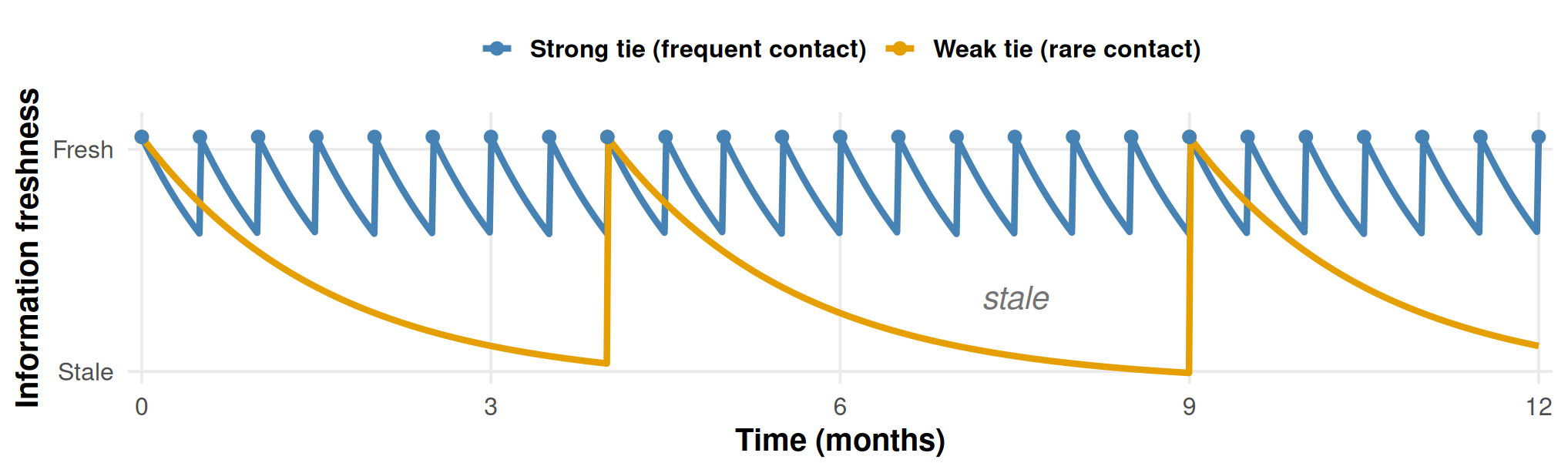
- The trading-floor case: a tight clique of traders all know the same things — but those things change by the minute, so every conversation still delivers novelty. Fast-changing environments favor high-bandwidth cohesive ties, however redundant the group looks in a snapshot.
The Wide World of Topics
- Every conversation samples only a slice of what your contact knows; a thick, high-bandwidth channel collects more slices.
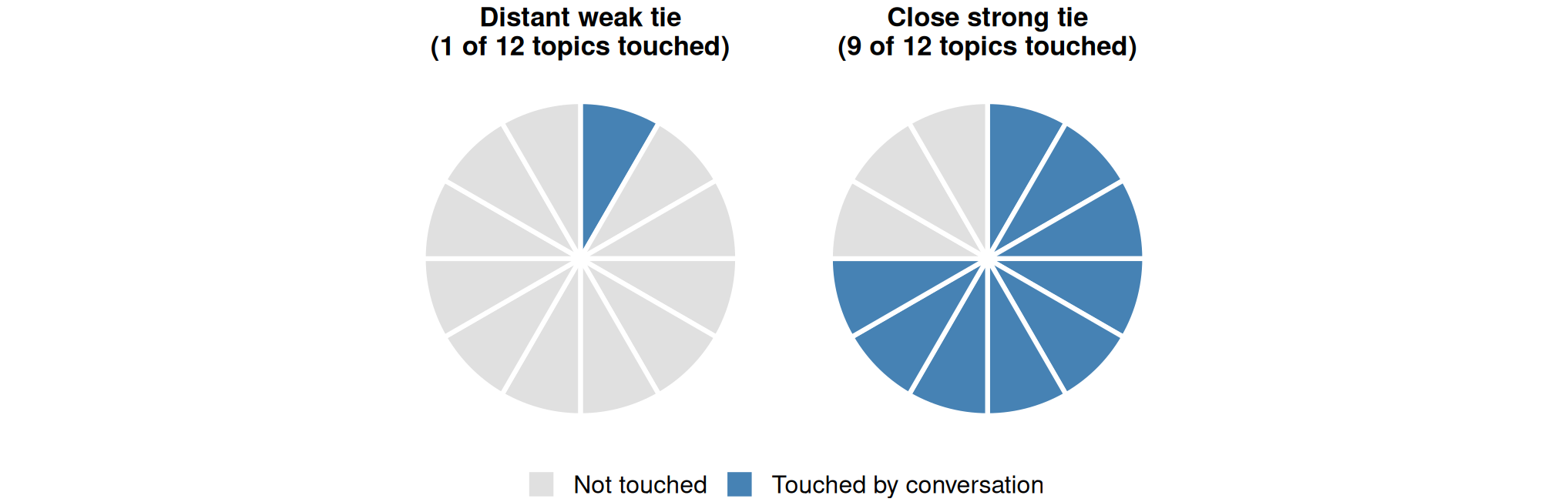
- A small topic world can be covered by a distant weak tie’s occasional update; a large topic space needs the high-volume sampling of a strong tie. Large topic spaces favor high-bandwidth ties; small ones favor diverse weak ties.
What the Evidence Shows
- Aral and Van Alstyne observed the actual content of e-mail flowing through an executive recruiting firm — among the first studies to watch information itself move through a network.
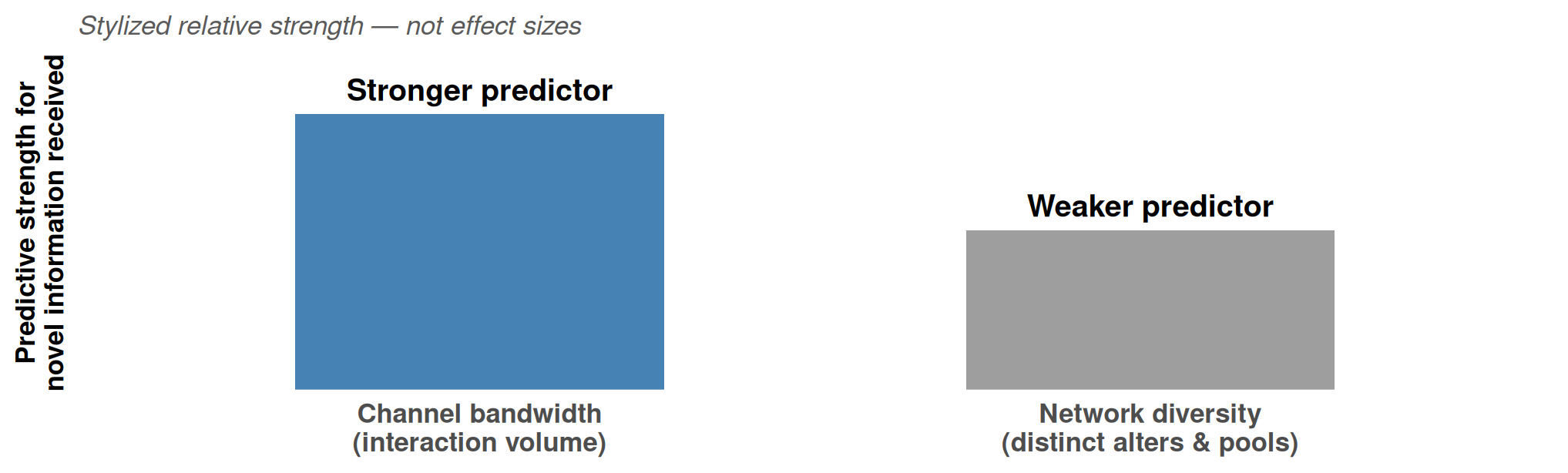
Bandwidth is the stronger predictor of total novelty received. Diversity pays less when contacts’ information overlaps, and more when topics are numerous and information refreshes quickly.
Recruiters who received more novel information generated more revenue and completed projects faster.
Optional: A Worked Constraint Example
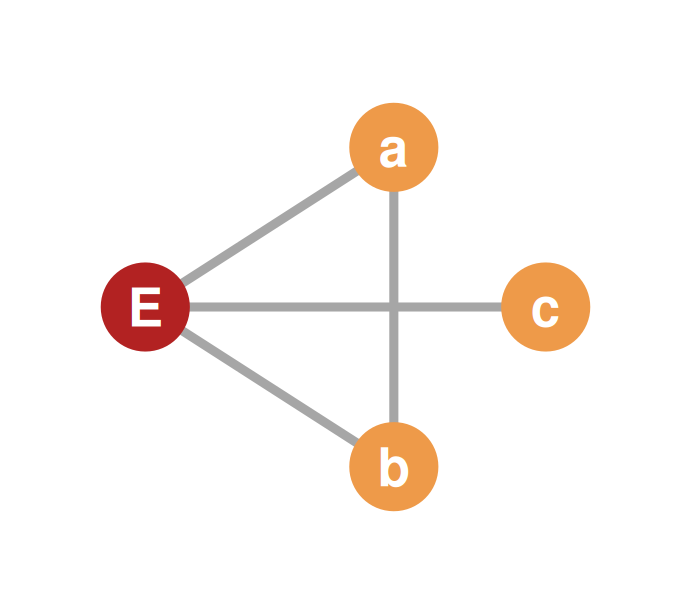
- Every tie has strength 1, and each contributes \(z_{Ej} + z_{jE} = 2\) to ego’s total investment of 6; so each direct share is \(p_{Ej} = 1/3\).
| Alter | Direct \(p_{Ej}\) | Indirect \(\sum_q p_{Eq} p_{qj}\) | \(c_{Ej}\) |
|---|---|---|---|
| a | 0.33 | 0.17 (via b) | 0.25 |
| b | 0.33 | 0.17 (via a) | 0.25 |
| c | 0.33 | 0.00 | 0.11 |
Aggregate: \(C_E = 0.25 + 0.25 + 0.11 = 0.61\).
Read the contrast: the mutual tie between a and b raises their constraint on Ego above c’s. Ego can reach each of them through the other, and they can act jointly. The isolated alter c is the hole Ego could span.