49 Homework IV: Matrix Operations
Consider the graphs shown in Figure 51.1:
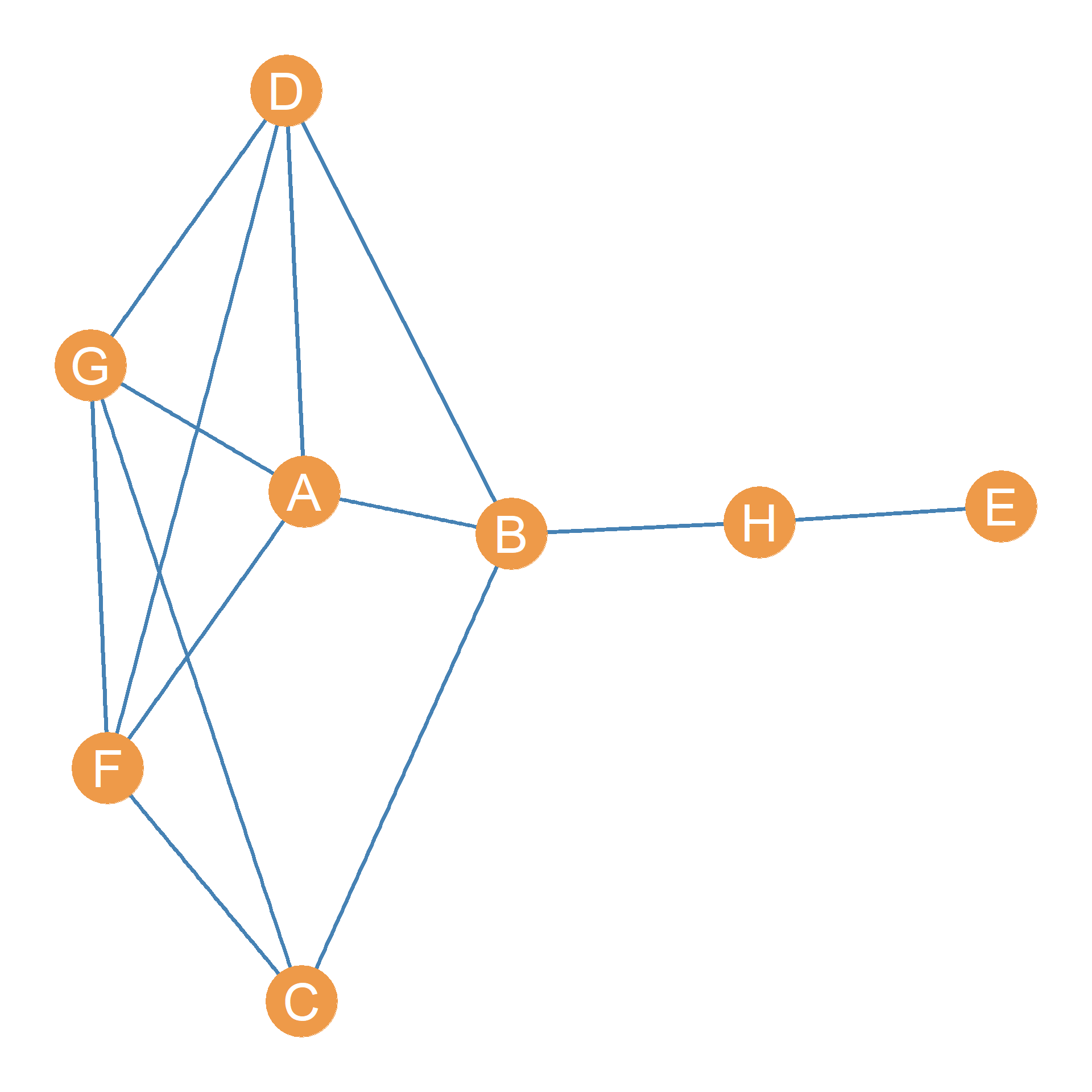
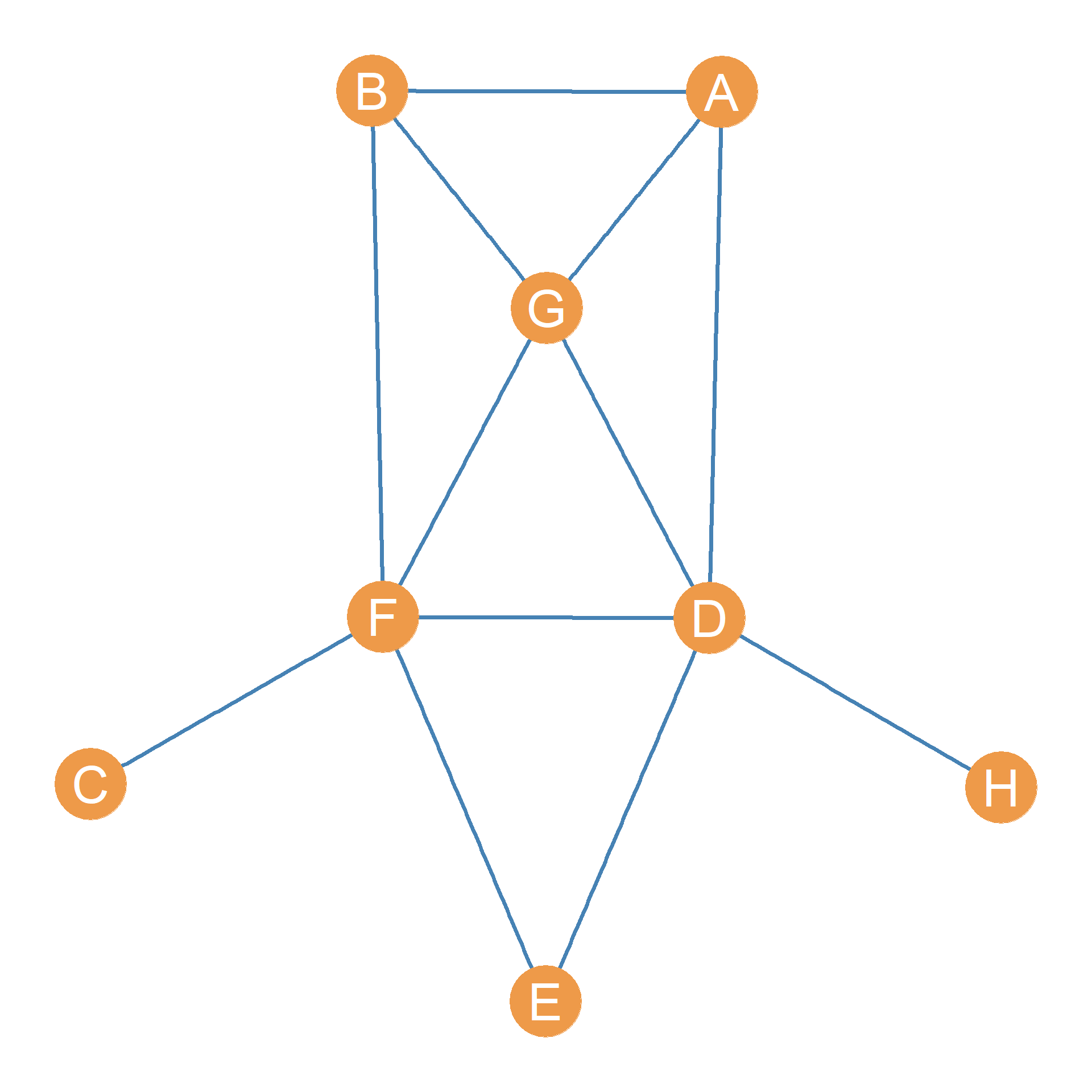
- Write down the adjacency matrix corresponding to each network:
Table 49.1: Two graphs representing two different set of network ties between the same people.
| A | B | C | D | E | F | G | H | |
|---|---|---|---|---|---|---|---|---|
| A | - | |||||||
| B | - | |||||||
| C | - | |||||||
| D | - | |||||||
| E | - | |||||||
| F | - | |||||||
| G | - | |||||||
| H | - |
| A | B | C | D | E | F | G | H | |
|---|---|---|---|---|---|---|---|---|
| A | - | |||||||
| B | - | |||||||
| C | - | |||||||
| D | - | |||||||
| E | - | |||||||
| F | - | |||||||
| G | - | |||||||
| H | - |
- Write down the matrix sum and the element-wise product of the adjacency matrices you filled out above:
Table 49.2: The sum and element-wise product of the adjacency matrices representing two different set of network ties between the same people.
| A | B | C | D | E | F | G | H | |
|---|---|---|---|---|---|---|---|---|
| A | - | |||||||
| B | - | |||||||
| C | - | |||||||
| D | - | |||||||
| E | - | |||||||
| F | - | |||||||
| G | - | |||||||
| H | - |
| A | B | C | D | E | F | G | H | |
|---|---|---|---|---|---|---|---|---|
| A | - | |||||||
| B | - | |||||||
| C | - | |||||||
| D | - | |||||||
| E | - | |||||||
| F | - | |||||||
| G | - | |||||||
| H | - |
Write the down the dyads that are connected via multiplex ties (dyads sharing more than one relationship at a time):
Write the down the dyads that are connected via uniplex ties (dyads sharing only one relationship at a time):
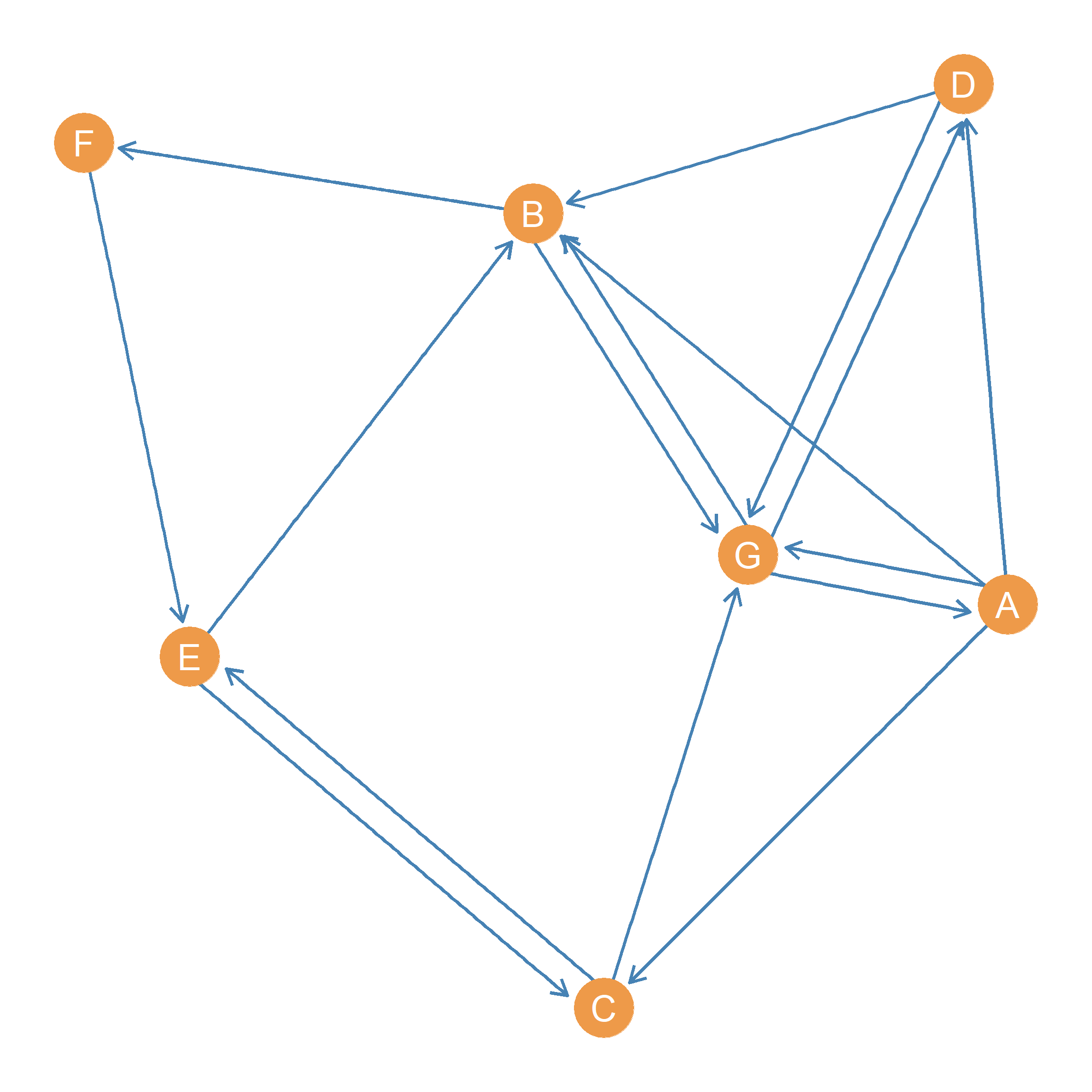
Consider the graphs shown in Figure 49.2:
- Fill out the four matrices below:
Table 49.3: Some Matrices Derived From a Directed Graph.
| A | B | C | D | E | F | G | |
|---|---|---|---|---|---|---|---|
| A | - | ||||||
| B | - | ||||||
| C | - | ||||||
| D | - | ||||||
| E | - | ||||||
| F | - | ||||||
| G | - |
| A | B | C | D | E | F | G | |
|---|---|---|---|---|---|---|---|
| A | - | ||||||
| B | - | ||||||
| C | - | ||||||
| D | - | ||||||
| E | - | ||||||
| F | - | ||||||
| G | - |
| A | B | C | D | E | F | G | |
|---|---|---|---|---|---|---|---|
| A | - | ||||||
| B | - | ||||||
| C | - | ||||||
| D | - | ||||||
| E | - | ||||||
| F | - | ||||||
| G | - |
| A | B | C | D | E | F | G | |
|---|---|---|---|---|---|---|---|
| A | - | ||||||
| B | - | ||||||
| C | - | ||||||
| D | - | ||||||
| E | - | ||||||
| F | - | ||||||
| G | - |
| A | B | C | D | E | F | G | |
|---|---|---|---|---|---|---|---|
| A | - | ||||||
| B | - | ||||||
| C | - | ||||||
| D | - | ||||||
| E | - | ||||||
| F | - | ||||||
| G | - |
How many mutual dyads in the graph?
How many asymmetric dyads in the graph?
What is the graph reciprocity?