50 Homework V: Affiliation Networks
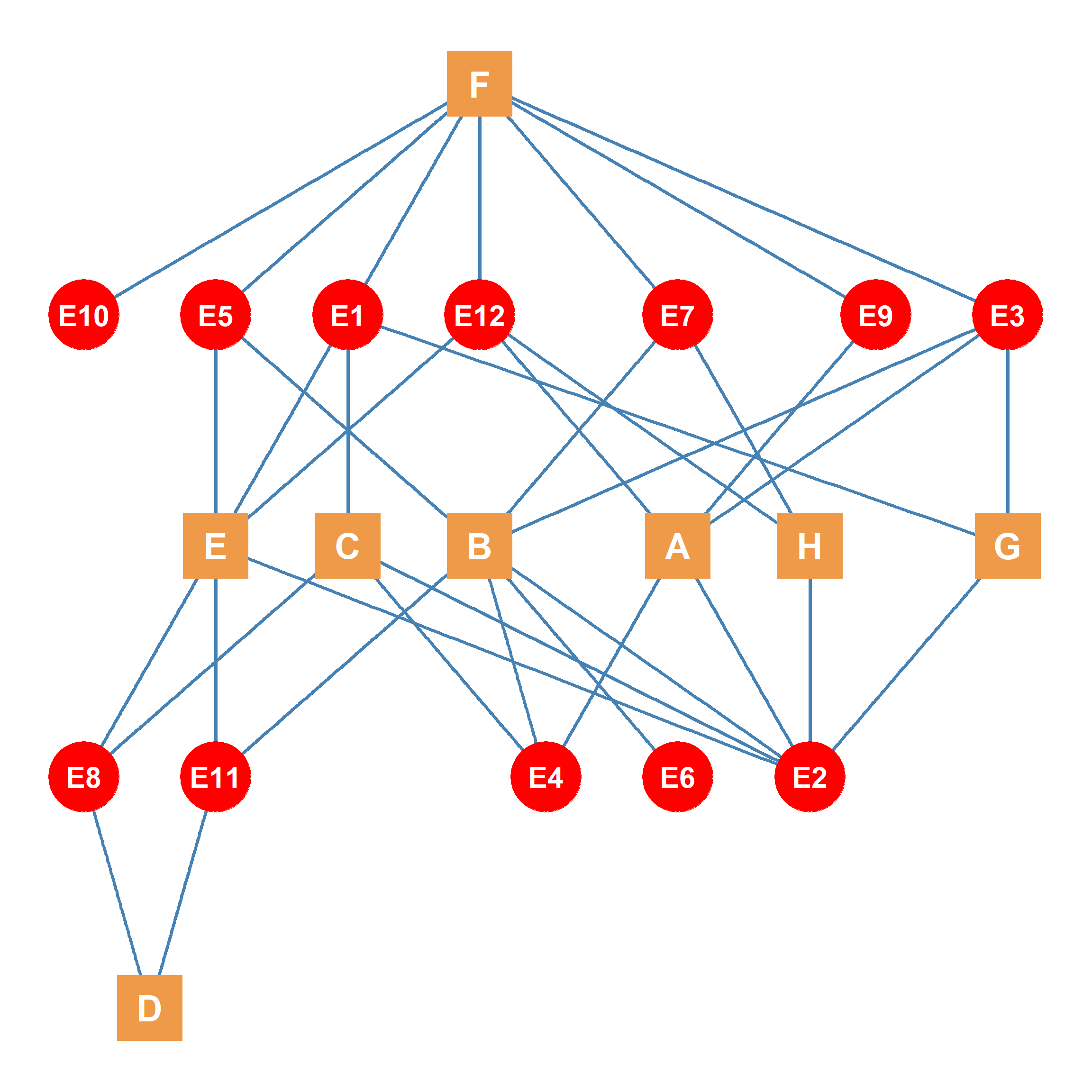
Figure 51.1 shows a bipartite graph corresponding to the attendance of different people (the tan square nodes) at different events (the red circle nodes).
50.1 From Bipartite Graph to Affiliation Matrix
- Write down the affiliation matrix corresponding to the bipartite graph shown in Figure 51.1.
| E1 | E2 | E3 | E4 | E5 | E6 | E7 | E8 | E9 | E10 | E11 | E12 | |
|---|---|---|---|---|---|---|---|---|---|---|---|---|
| A | ||||||||||||
| B | ||||||||||||
| C | ||||||||||||
| D | ||||||||||||
| E | ||||||||||||
| F | ||||||||||||
| G | ||||||||||||
| H |
50.2 Bipartite Node Neighborhoods
Write down the neighborhood of node G
Write down the neighborhood of event E11
What is the intersection of the neighborhoods nodes A and E?
What is the intersection of the neighborhoods of events E11 and E6?
What is the union of the neighborhoods nodes B and C?
What is the union of the neighborhoods of events E9 and E5?
50.3 Bipartite Degrees
Write down the person degree sequence
Write down the event degree sequence
What is the bipartite graph’s sum of degrees?
50.4 Bipartite Graph Metrics
Which person(s) attend(s) the most events?
Which person(s) attend(s) the least events?
What is the average number of events attended by people?
Which is(are) the largest event(s)?
Which is(are) the smallest event(s)?
What is the average event size?
50.5 Matrix Transpose
- Write down the transpose of the affiliation matrix corresponding to the bipartite graph.
| A | B | C | D | E | F | G | H | |
|---|---|---|---|---|---|---|---|---|
| E1 | ||||||||
| E2 | ||||||||
| E3 | ||||||||
| E4 | ||||||||
| E5 | ||||||||
| E6 | ||||||||
| E7 | ||||||||
| E8 | ||||||||
| E9 | ||||||||
| E10 | ||||||||
| E11 | ||||||||
| E12 |
50.6 The Duality of Persons and Groups
Using the information in the previous tables and what you know about matrix multiplication:
- Write down the entries corresponding to the co-membership matrix for the different people.
| A | B | C | D | E | F | G | H | |
|---|---|---|---|---|---|---|---|---|
| A | ||||||||
| B | ||||||||
| C | ||||||||
| D | ||||||||
| E | ||||||||
| F | ||||||||
| G | ||||||||
| H |
- Write down the entries corresponding to the group overlap matrix for the different events.
| E1 | E2 | E3 | E4 | E5 | E6 | E7 | E8 | E9 | E10 | E11 | E12 | |
|---|---|---|---|---|---|---|---|---|---|---|---|---|
| E1 | ||||||||||||
| E2 | ||||||||||||
| E3 | ||||||||||||
| E4 | ||||||||||||
| E5 | ||||||||||||
| E6 | ||||||||||||
| E7 | ||||||||||||
| E8 | ||||||||||||
| E9 | ||||||||||||
| E10 | ||||||||||||
| E11 | ||||||||||||
| E12 |